Distribution Power Line Tree Clearance

Trees are a valuable and beautiful asset that complement our landscape, shade our homes, reduce energy needs in summer and provide food and shelter to wildlife.

However, when trees are planted without regard to their surroundings, or are not properly maintained, they can create serious issues that grow worse each year. They can cause property damage, create safety hazards, and disrupt our utility service.

We clear trees from overhead power lines to provide safe, reliable electric service

At LG&E and KU, we work hard to provide you with safe, reliable electric service 24 hours a day, 7 days a week. Our Powerline Tree Clearance program helps create a safer environment for everyone and maintains the reliable electric service you expect and deserve. Keeping overhead powerlines clear of limbs and brush also allows our crews to detect and repair issues that impact service during storms or other times of trouble.

Even if your electric service is underground, it eventually connects to overhead lines that serve your area which could be impacted by tree growth.

We conduct Powerline Tree Clearance throughout our service area on a consistent and planned cycle to ensure reliable service.

What to expect when we trim

Trees are trimmed by our experienced professionals, and the work is supervised by our certified arborists. Our crews use proper methods designed to protect healthy trees.

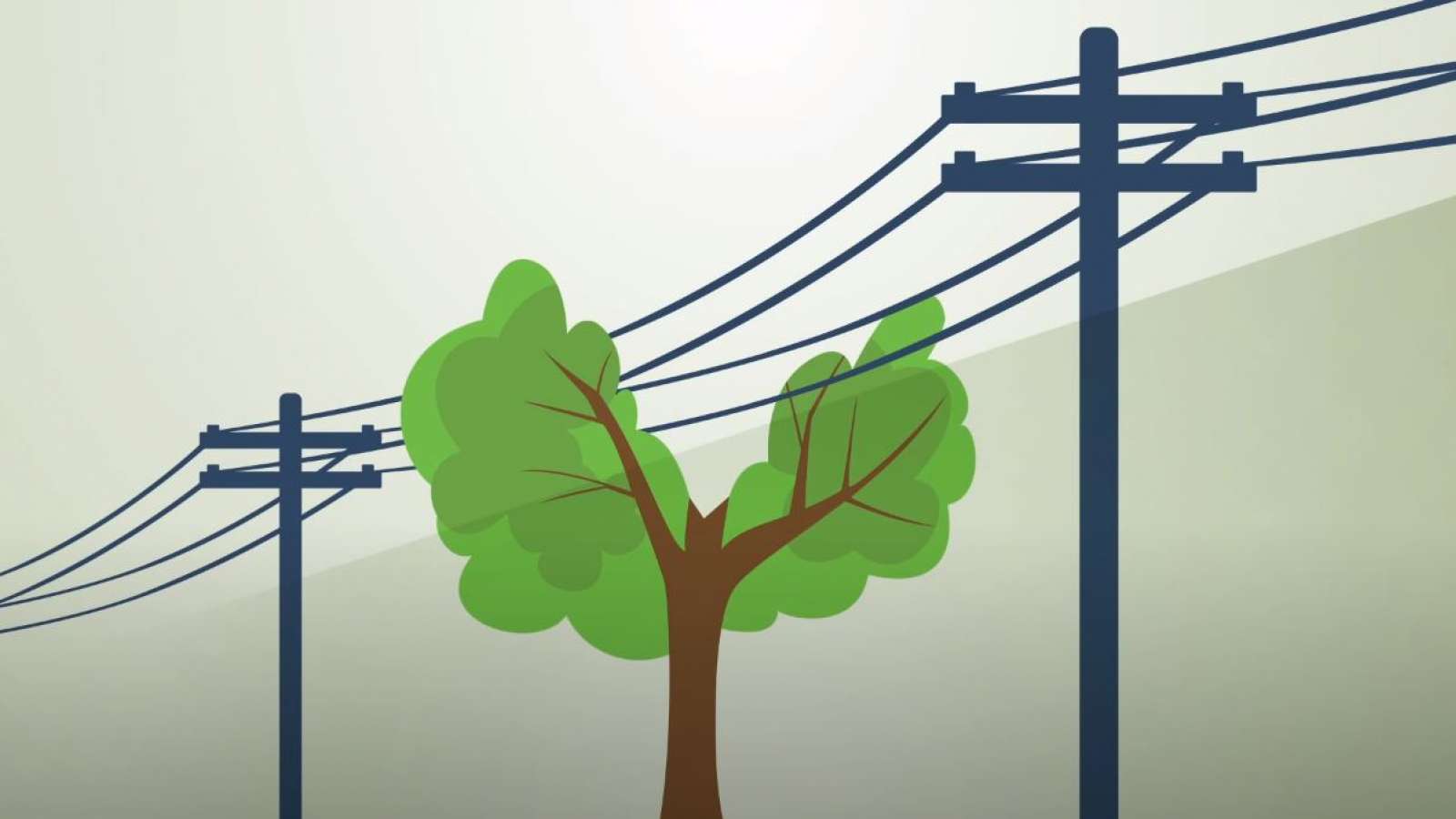
There may be instances where we will use crown reduction techniques, but our crews most often use techniques like the “V” or “L” cut specifically to ensure powerline clearance because these methods maintain the health of the tree. In some cases, this may mean the aesthetics or natural shape of the tree is dramatically altered. This is done intentionally to ensure that tree limbs are cut back far enough so they won’t grow into the powerlines before the next scheduled trimming cycle.

Disposal and clean up

After a tree is trimmed, smaller limbs and branches are run through a wood chipper and hauled away. In an effort to hold down costs, which means lower rates for customers, larger branches are cut into manageable lengths and left behind for the property owner’s use or disposal. In some areas like hillsides, leaving cut vegetation can protect against erosion.

During storm restoration: If a tree lands on a power line during a storm, causing the lines to sag and/or break from the pole, LG&E and KU will remove the trees from the line and restring the lines. The removal of the tree debris such as branches and large limbs is the responsibility of the homeowner. Crews will not be able haul away debris or use woodchippers as this could slow down restoration efforts.

Trees and Power Lines

When trees are planted without regard to their surroundings, or are not properly maintained, they can create serious issues that grow worse each year. They can cause property damage, create safety hazards, and disrupt utility service.

Right Tree, Right Place

Planning ahead is important when you are thinking about planting a new tree. People often plant trees without thinking about how large they will grow once they mature. It’s difficult to imagine that the six- or eight-foot tree you plant today could grow as tall as 80 or 100 feet over time.

Our Right Tree, Right Place brochure can help you select a tree that is appropriate for the area you’re considering.