Why are LG&E and KU making these improvements?
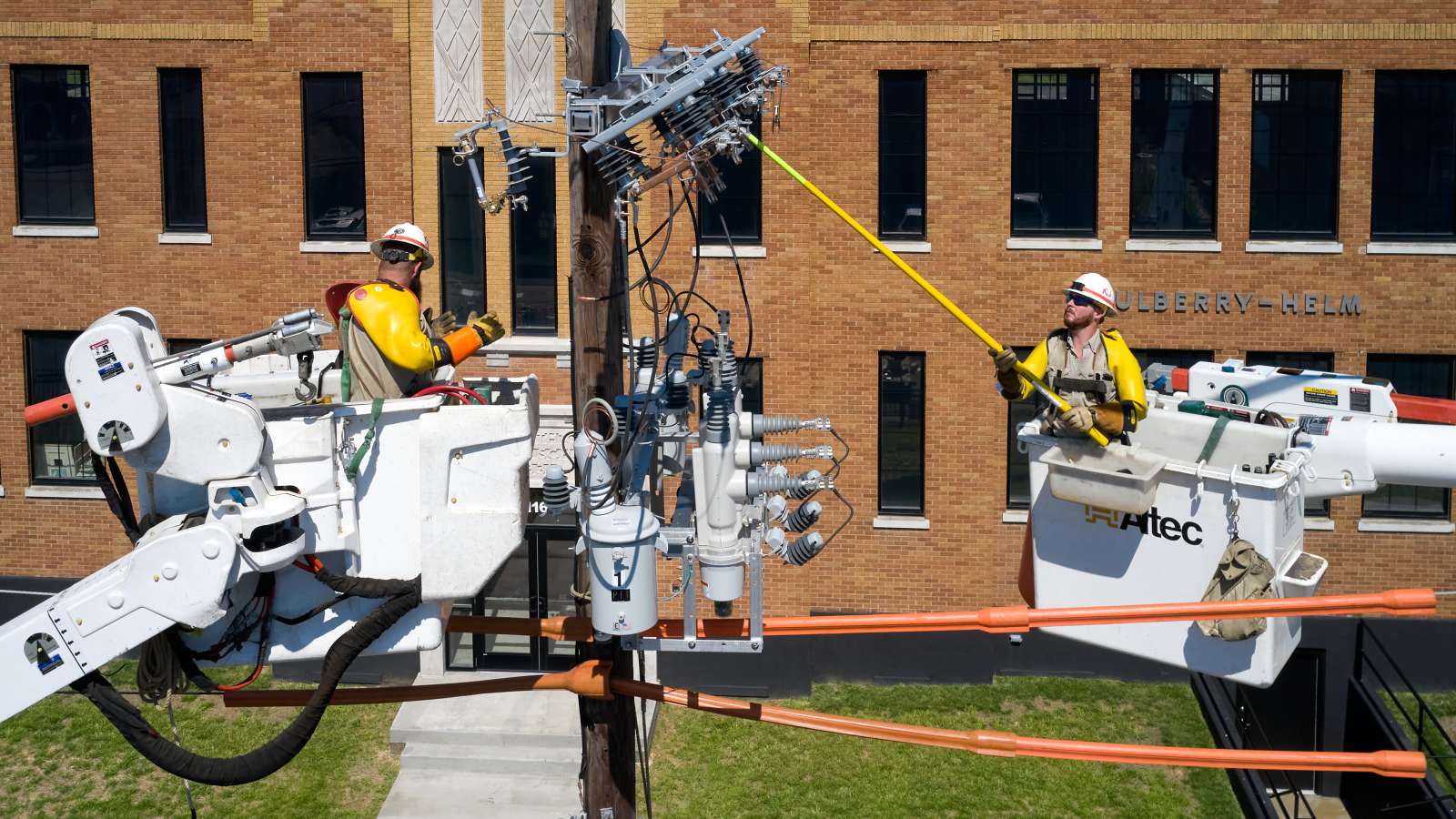
As severe weather becomes more frequent and extreme across Kentucky, LG&E and KU are investing in stronger infrastructure to reduce outages, speed up restoration, and make the grid more resilient for the future. Reliable electricity ensures homes, businesses, and communities run smoothly when Mother Nature hits.
Why are LG&E and KU requesting an easement on my property?
An easement provides access to your property to install, maintain, and replace underground power lines and related equipment. The easement width may vary, typically 15-20 feet, and depends on site conditions. During the easement process, a right of way agent from the company or its contractor will contact you to discuss the easement and its location on your property.
Why has my neighborhood been identified for underground power lines?
We used a data driven approach to determine where undergrounding power lines will have the greatest impact. This approach considered several key factors: historical outage data, vegetation density and storm exposure. The information was fed into a model which helped us identify locations where placing lines underground will improve reliability and reduce future outages in the most cost-effective way.
If I sign the easement, can you remove the pole from my backyard?
We will evaluate pole removals on a case-by-case basis. If there are other utility services located on the pole (like cable or telephone), it may need to stay within the existing easement. In some limited situations the existing electric lines may remain as part of the circuit network.
If there is a tree on the easement that needs to be removed, will you let me know in advance if it must be removed? Will the roots be affected?
Yes, we will assess the area and contact you if any trees or vegetation must be removed. We make every effort to minimize impact and avoid root damage by using directional underground boring rather than open trenching. Any removed debris will be cleared away, though plants or trees removed will not be replaced.
If there is a fence or obstacle that needs to be removed, will you let me know in advance if it must be removed?
In some instances, fences or obstacles must be temporarily removed to allow access and restored when completed. For situations where the obstacle is permanently removed to meet our needs, a reasonable damage payment will be considered based upon the condition of the obstacle.
What is the standard depth that you install your lines?
Lines are generally placed a minimum of 30-42 inches below ground level.
What is the reason for requiring this width for the easement?
The easement width ensures there is enough room for crews to safely install and maintain the underground power lines and any necessary above ground equipment.
With the move of the power lines underground to the front yard, why can’t the transformer box be installed in the backyard?
With the relocation of the power lines to an underground route that now enters the property from the front yard, the transformer must be installed in the front yard to align with this new path of service. Placing the transformer in the front ensures it sits directly along the revised power route and allows our line crews to safely and efficiently perform maintenance, inspections, and any necessary repairs. Locating the equipment in the front yard improves accessibility and helps ensure reliable service while minimizing future disruption to the property.
Will the property be returned to its original condition after the work is finished?
Yes. Once work is complete, we will restore your property as close as possible to its original condition. Restoring your property is part of the success of the project. If you notice any issues afterward, we will work with you to address them.
Will this work affect traffic in my area?
Temporary lane closures or traffic flow changes may be needed for the safety of our crews and those working in the area. We will clearly mark work zones and notify property owners in advance if any closures are expected.
Will I be without power during this work?
During construction you will not lose power. Crews and equipment will be conducting boring and digging within the easements and service lines to your meter. When it is time to connect the new underground service, you will experience a power outage that impacts your service. You will be notified prior to when this outage will occur.
How will I know if LG&E and KU will need to get in my backyard?
We understand that many yards have locked gates due to dogs or security reasons. As part of the construction notification process, LG&E and KU will make a phone call, leave a door hanger requesting a returned call, or knock on the door 24 hours before to discuss the construction work that will take place on your property and ensure LG&E and KU has the appropriate safe access.
Who pays for these reliability upgrades?
This work is being completed as part of our long-term system enhancement projects through the Distribution System Hardening and Resiliency Program to better serve all customers and further enhance system reliability. There is no additional cost to individual customers where we have identified the need to make system improvements.
How will this affect my driveway?
We plan to bore under driveways and do not anticipate any impact. If the driveway is damaged, we will restore the damaged section of driveway.
Who is responsible for the weatherhead removal?
We are only relocating the electric service and will do so in a safe manner. The weatherhead is customer-owned property and the responsibility of the customer to remove upon completion if they choose.
Will I be paid for the easement?
No. We do not compensate for the easements required for the underground program. Customers can support of the reliability project by signing the easement for their property. If we are not able to secure the necessary easements, we will look for other engineering solutions or viable routes.
Will my meter base be changed?
No, there are no plans to change the customer-owned meter base. An adapter will be utilized to feed the meter from the new underground service line.
How will this affect my bill?
All LG&E and KU customers are funding and benefiting from improved reliability and performance of the power lines that serve your property. By reducing outages and costs associated restoration and vegetation management, savings will be realized over the long term.
Am I responsible for the underground service line after installation?
LG&E and KU will be responsible for maintaining the new underground service line to your property.
How can I learn more about the planned work in my area?
Project information is available at lge-ku.com/reliability. If you have additional questions, please contact us 502-627-4072 or at reliability.projects@lge-ku.com.